How to Build Discipline When Motivation Is Gone
Everyone starts motivated. By week three, the excitement is gone and the results aren't showing yet. That's the moment that decides everything. Discipline isn't a personality trait; it's a skill you can build.
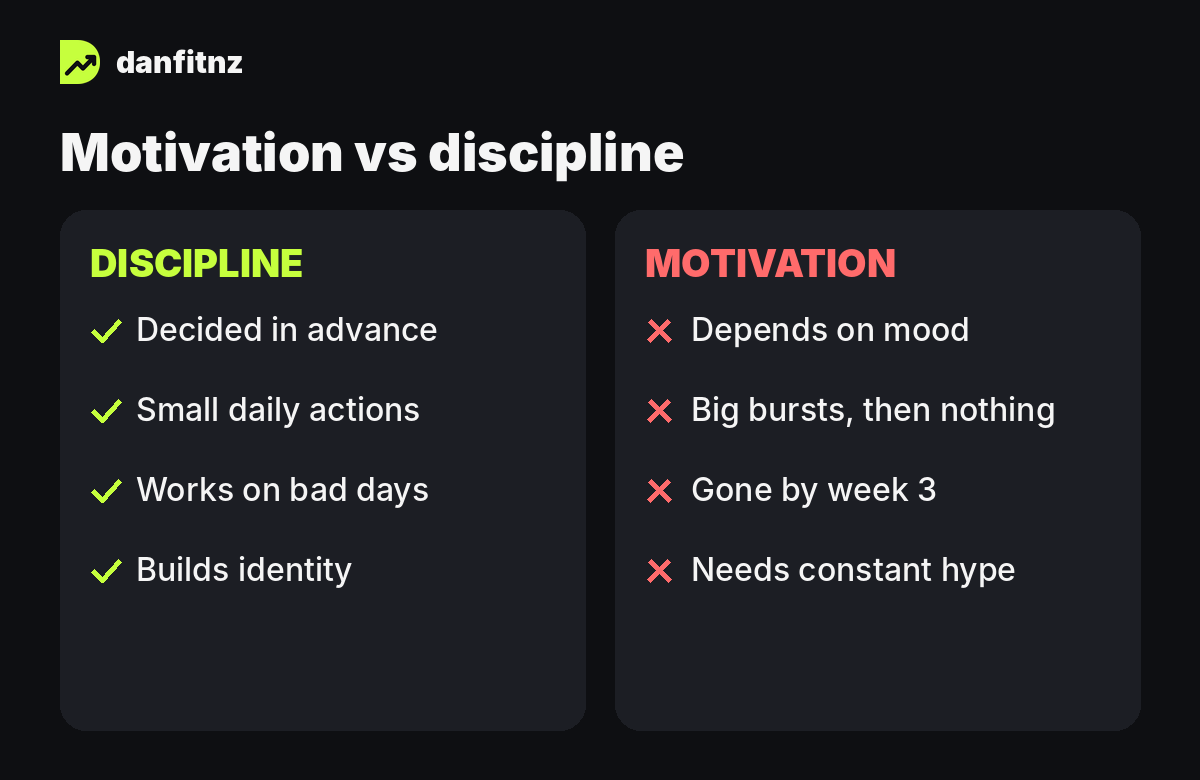
Motivation is a feeling, discipline is a system
Motivation goes up and down with sleep, stress and mood. Discipline means doing the thing anyway, because the decision was made in advance. The trick is to rely less on willpower and more on routines that make the right choice automatic.
Start smaller than you think
Most people fail because the plan is too big. Instead of 'gym 6 days a week and no sugar ever', start with 'walk 20 minutes after dinner' and 'protein at every meal'. Small wins build identity: you become someone who shows up.
Use the never-miss-twice rule
Missing one workout is life. Missing two in a row is the start of a new habit. When you slip, make the next one non-negotiable, even if it's just 10 minutes.
Build your environment
- Lay out gym clothes the night before
- Keep protein-rich food ready in the fridge
- Put your phone away from your bed
- Schedule workouts like meetings
- Track streaks on a calendar you can see
Make it part of who you are
Every rep is a vote for the person you're becoming. After 30 days of small promises kept, you won't need motivation to start. You'll just be someone who trains.
Gear that helps
 Step and sleep trackerTracking steps and sleep makes the basics measurable.
FAQ
Is discipline better than motivation?
For long-term results, yes. Motivation gets you started; discipline and routine keep you going when the feeling fades.
How long does it take to build a habit?
It varies a lot, but research suggests around two months on average for a new habit to feel automatic.
Keep reading
General information only, not medical advice. Talk to your GP about hormones, medications or health conditions.