Cortisol and Belly Fat: What Stress Really Does to Fat Loss
Cortisol gets blamed for stubborn belly fat all over social media. The truth is more useful: cortisol isn't the enemy, but long-term stress can quietly make fat loss harder. Here's what's really going on and what to do about it.
What cortisol actually is
Cortisol is a hormone made by your adrenal glands. It wakes you up in the morning, helps control blood sugar and blood pressure, and gives you energy when you're under pressure. A short spike during a workout or a busy day is completely normal and healthy.
When cortisol becomes a problem
Trouble starts when stress never switches off: poor sleep, long work hours, money worries, constant phone notifications. Chronically raised cortisol is linked with more fat stored around the waist, stronger cravings for sugary and fatty food, and worse sleep, which then raises cortisol again.
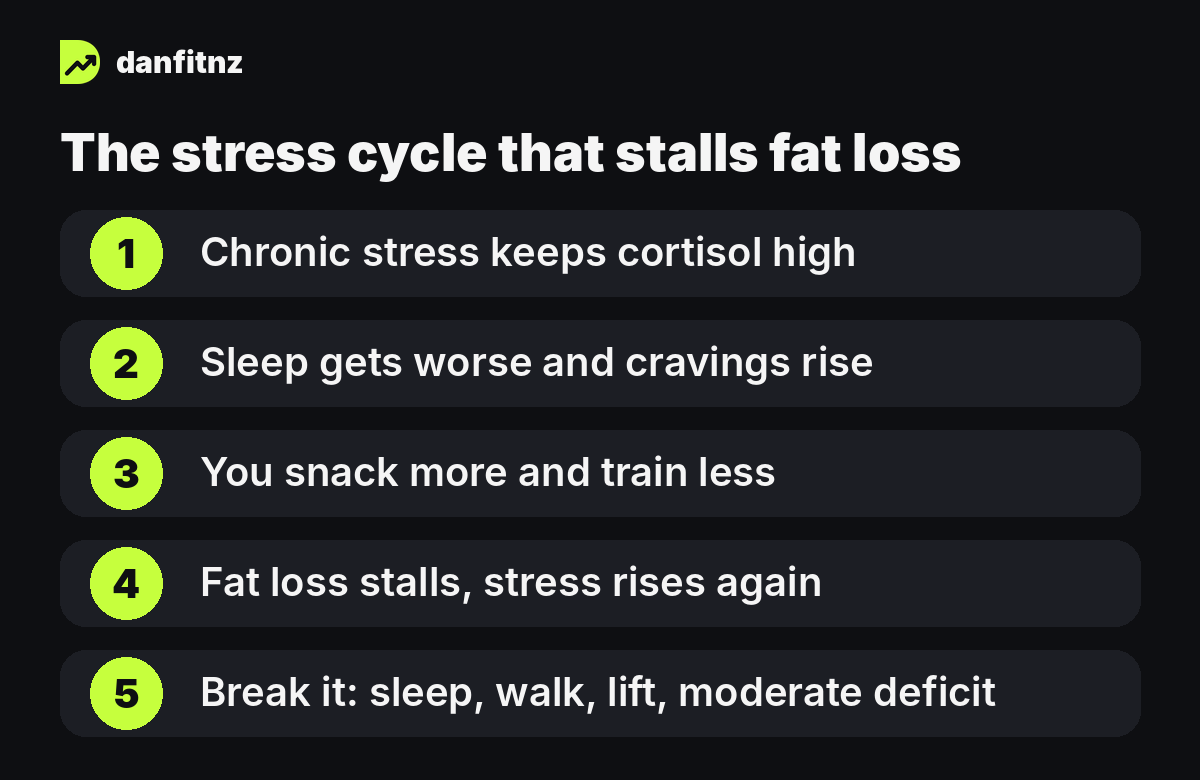
Cortisol doesn't cancel out a calorie deficit
Stress can't create fat out of nothing. You still need to eat more than you burn to gain fat. What stress does is make the deficit harder to stick to: you feel hungrier, you snack more, you skip workouts and you sleep less. That's why stressed people often stall.
6 ways to keep cortisol in check
- Sleep 7–9 hours with a consistent bedtime
- Walk daily, ideally outdoors, for 20–40 minutes
- Lift weights 3–4 times a week but avoid daily all-out sessions
- Don't crash diet: keep your deficit moderate
- Limit caffeine after midday
- Take 5 minutes of slow breathing (4 seconds in, 6 out) when stress spikes
Does cardio raise cortisol?
Hard training raises cortisol briefly, which is normal. The issue is doing intense cardio every day while sleeping badly and eating very little. Mix strength training with walking and you get the benefits without the burnout.
Gear that helps
 Step and sleep trackerTracking steps and sleep makes the basics measurable.
 Digital kitchen scaleWeighing food for 2–3 weeks teaches you real portion sizes.
FAQ
Does cortisol cause belly fat?
Long-term high cortisol is linked with more abdominal fat, but you still need a calorie surplus to gain fat. Stress mainly makes overeating and poor sleep more likely.
How can I lower cortisol naturally?
Sleep 7–9 hours, walk daily, keep caffeine to the morning, avoid crash diets, and use slow breathing to calm down.
Should I take cortisol supplements?
Most 'cortisol blocker' supplements have weak evidence. Fix sleep, stress and diet first, and talk to your GP if you suspect a hormone problem.
Keep reading
General information only, not medical advice. Talk to your GP about hormones, medications or health conditions.